
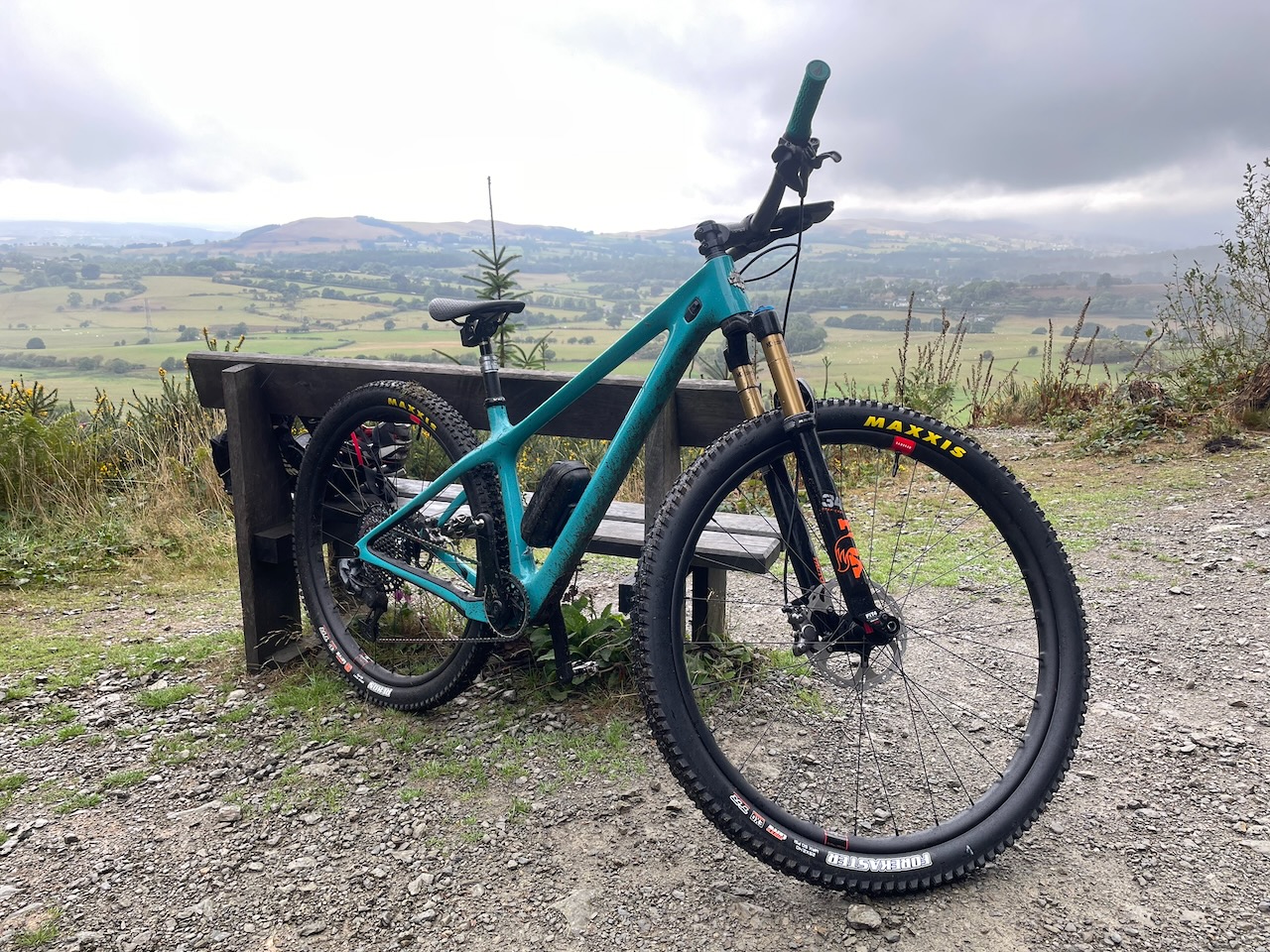
I’ve always hankered after another hardtail.
But the last time I seriously considered one was probably around 2014. I test rode a few and, while I liked the simplicity and directness, I couldn’t really see myself living with one.
They were simply too uncompromising.
More than a decade later, and now at 64, deciding to build one might therefore seem slightly perverse. If anything, conventional wisdom says that as riders get older we should be looking for more suspension, more comfort and bikes that make life easier.
But quite a lot has changed since 2014 — and I started wondering whether my view of hardtails needed to change with it.
The hardtail has changed
One of the biggest differences is wheels and tyres.
When I last looked seriously at hardtails, XC rims were commonly around 21–22 mm internally. Today we’re able to put a 2.4-inch tyre onto a 30 mm internal-width XC rim.
That’s not just a bigger number.
The wider rim supports the tyre differently and produces a much better shape. We actually compared the profile of a 2.4-inch tyre on the 30 mm rim with some 2.6-inch tyres mounted on narrower rims in the shop. The resulting profiles were remarkably similar.
That got me thinking.
Could the additional tyre volume, better-supported casing and lower pressures give me some of the compliance I wanted without having rear suspension?
Frame design has moved on as well. Modern carbon hardtails aren’t necessarily designed simply around making the rear triangle as stiff as possible. The Yeti ARC was particularly interesting to me because I wondered whether its carbon construction and rear triangle might provide some compliance.
Then add modern geometry, a 120 mm suspension fork and a dropper post, and this starts looking very different from the hardtails I remember.
So I decided to find out.
Starting with a Yeti ARC
The basis of the project was a new Yeti ARC carbon frame.
Before we did anything else, we Invisiframed it. This wasn’t going to be a show bike. I intended to ride it properly, so protecting the frame before the build made sense.
Then came the interesting question:
How much new equipment did I actually need?
I already had a 2015 Yeti ASR, but it’s slightly misleading to say that I was going to build the ARC using 11-year-old components. A number of the important components on the ASR had been replaced or upgraded in 2021.
And if those components were still good, why replace them?
That became one of the principles behind the build.
Don’t replace something simply because it’s old. Replace it because it’s worn out, doesn’t fit, or because newer technology offers a worthwhile improvement.
Used doesn’t mean neglected
The 2021 Fox Step-Cast fork was an obvious candidate for reuse.
But transferring a used component doesn’t mean simply taking it off one bike and bolting it onto another.
We stripped the fork and found quite a lot of grime around the wipers. The lowers were thoroughly cleaned, the wipers and seals replaced, the correct quantities of oil added and the fork reassembled and torqued correctly.
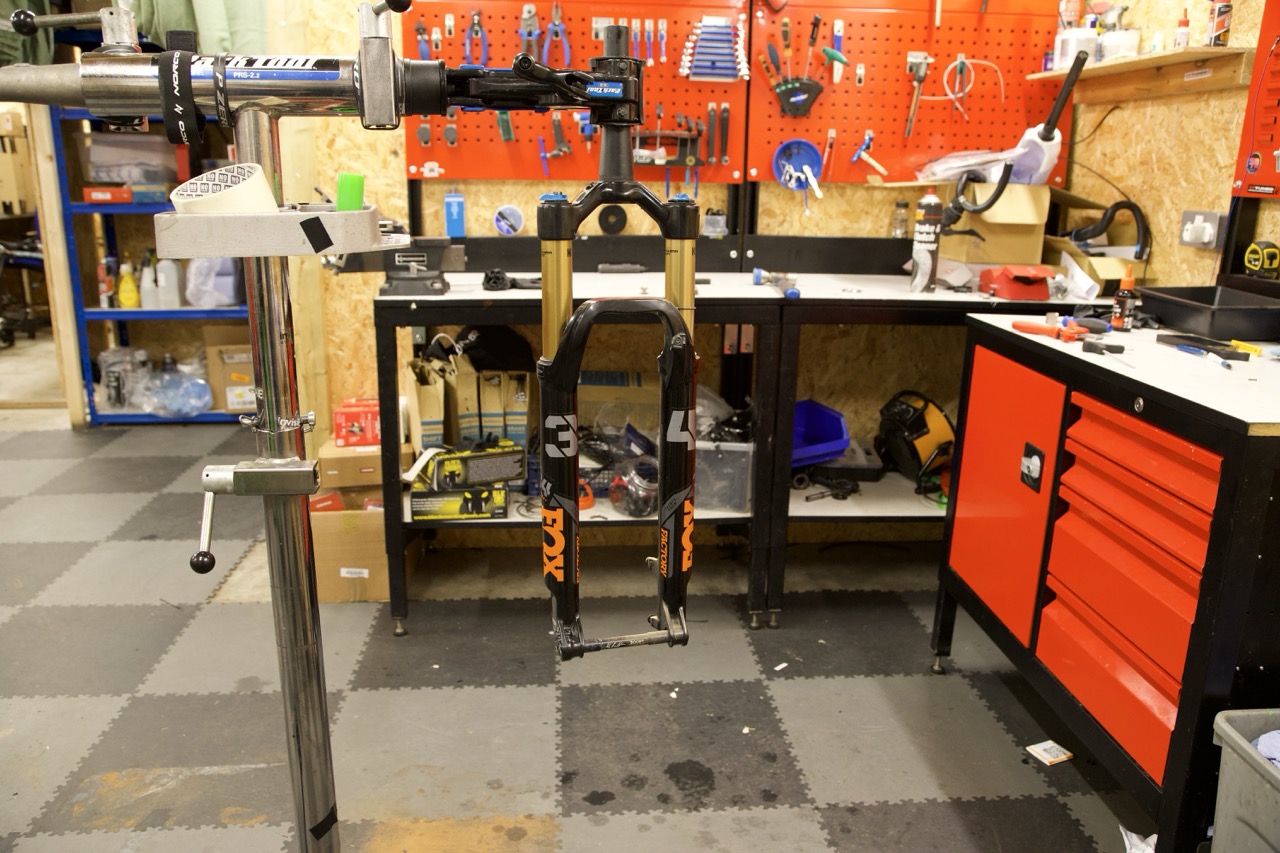
It was a used fork, but it was going onto the ARC properly serviced and ready to ride.
The Shimano XTR brakes were treated in much the same way. There was no good reason to replace them, so they were transferred and bled.
The SRAM XX1 rear mech and its shifter could also be reused, as could the 2021 Reverb dropper.
The Reverb presented a small problem because its diameter didn’t match the ARC’s seat tube. The answer wasn’t automatically to buy another seatpost. A correctly sized shim allowed us to use the existing one.
The original Thomson stem and Race Face Next carbon handlebars could also make the move across.
This wasn’t about building the ARC as cheaply as possible. It was about asking whether replacing a perfectly serviceable component would actually make the bike better.
New where new made sense
There were obviously components that couldn’t be reused.
The ARC required a different headset arrangement from the ASR, so the existing headset wasn’t compatible.
I chose a new Chris King headset.
There was a very simple reason for that choice: longevity. The Chris King headset on the ASR was still functioning after around 11 years. If I could have transferred it to the ARC, I probably would have.
I couldn’t, so buying another one made sense.
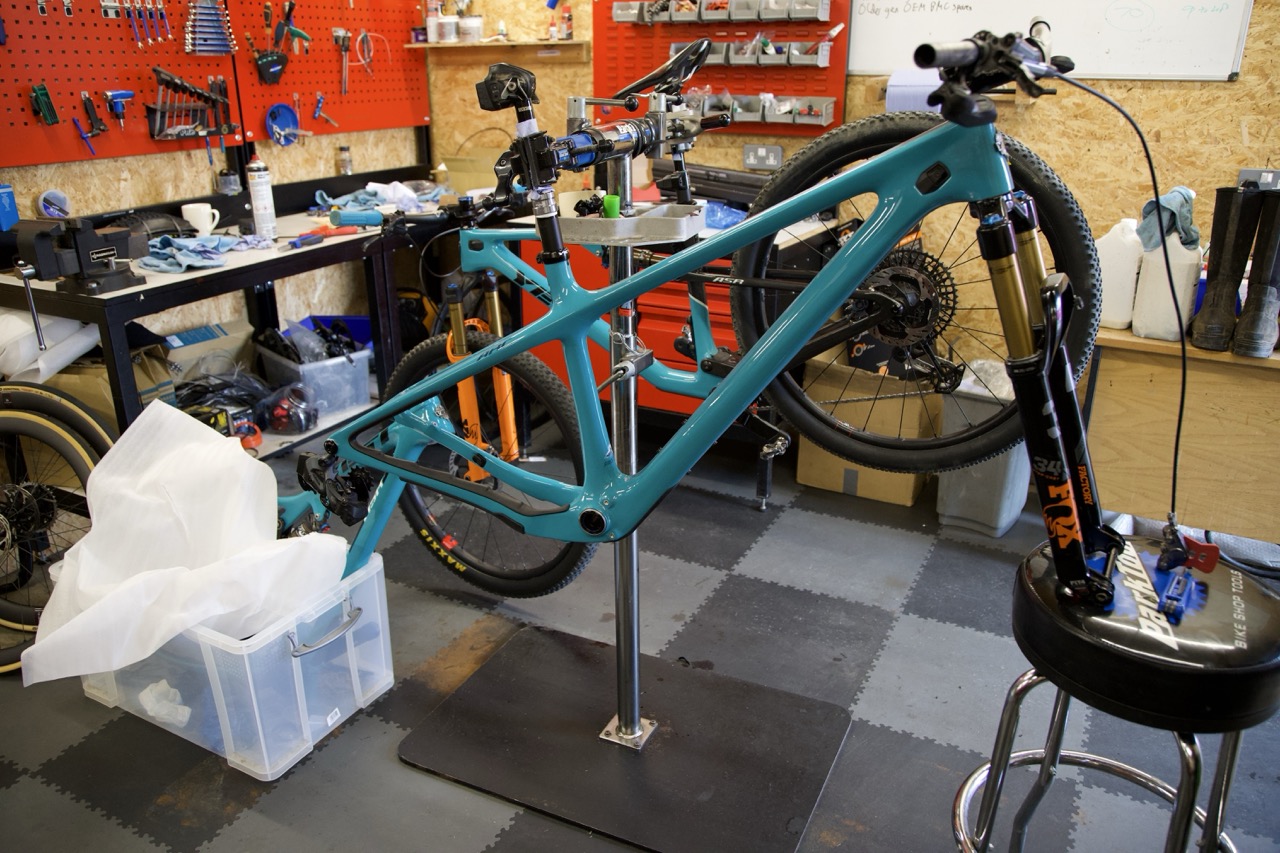
The ARC also received a new bottom bracket and a crankset incorporating a single-sided power meter. That wasn’t necessary to make the bike work, but having power data gives me something potentially much more interesting later: the ability to compare how the ARC actually performs against my other bikes rather than relying entirely on how it feels.
Where I deliberately spent the money
The wheels were one area where I specifically wanted modern technology.
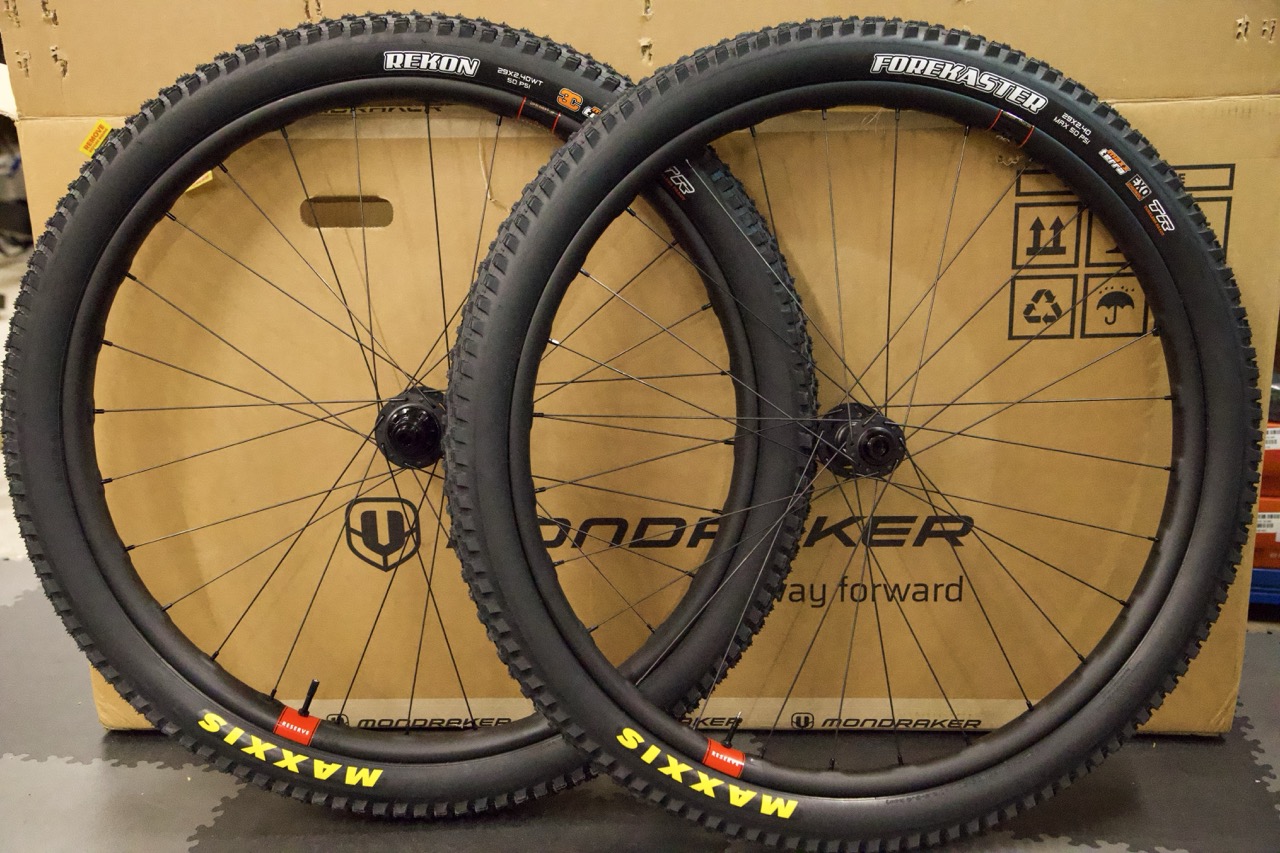
I eventually chose Reserve 30XC carbon wheels, with a 30 mm internal rim width.
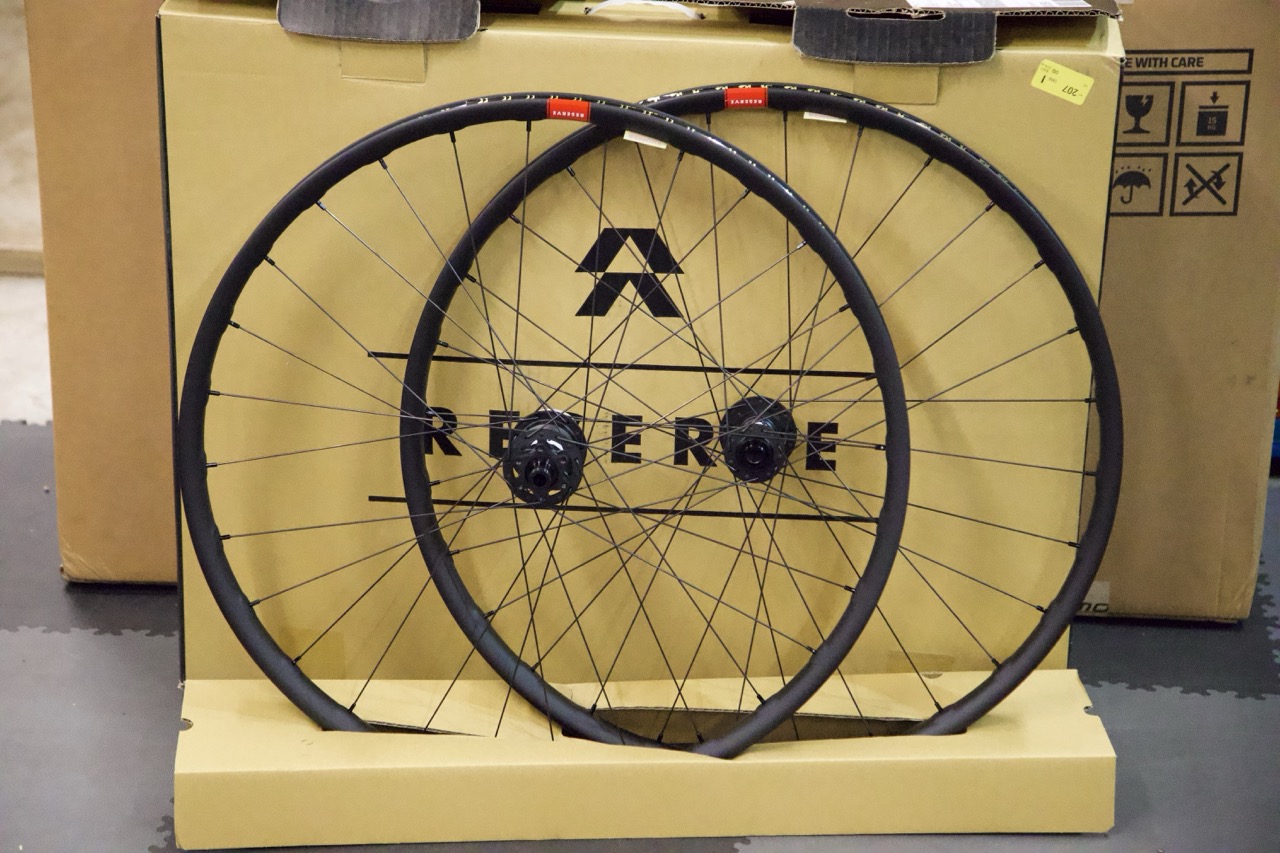
These were paired with 2.4-inch Maxxis tyres: a Forekaster at the front and Rekon at the rear.
This wasn’t simply about fitting big tyres to make a hardtail more comfortable.
Without rear suspension, the rear wheel and tyre are going to have to deal with impacts that would otherwise be partially absorbed by the suspension. I therefore wanted good tyre volume, a supported casing and the ability to run relatively low pressures.
My starting point was around 20 psi at the front and 21 psi at the rear.
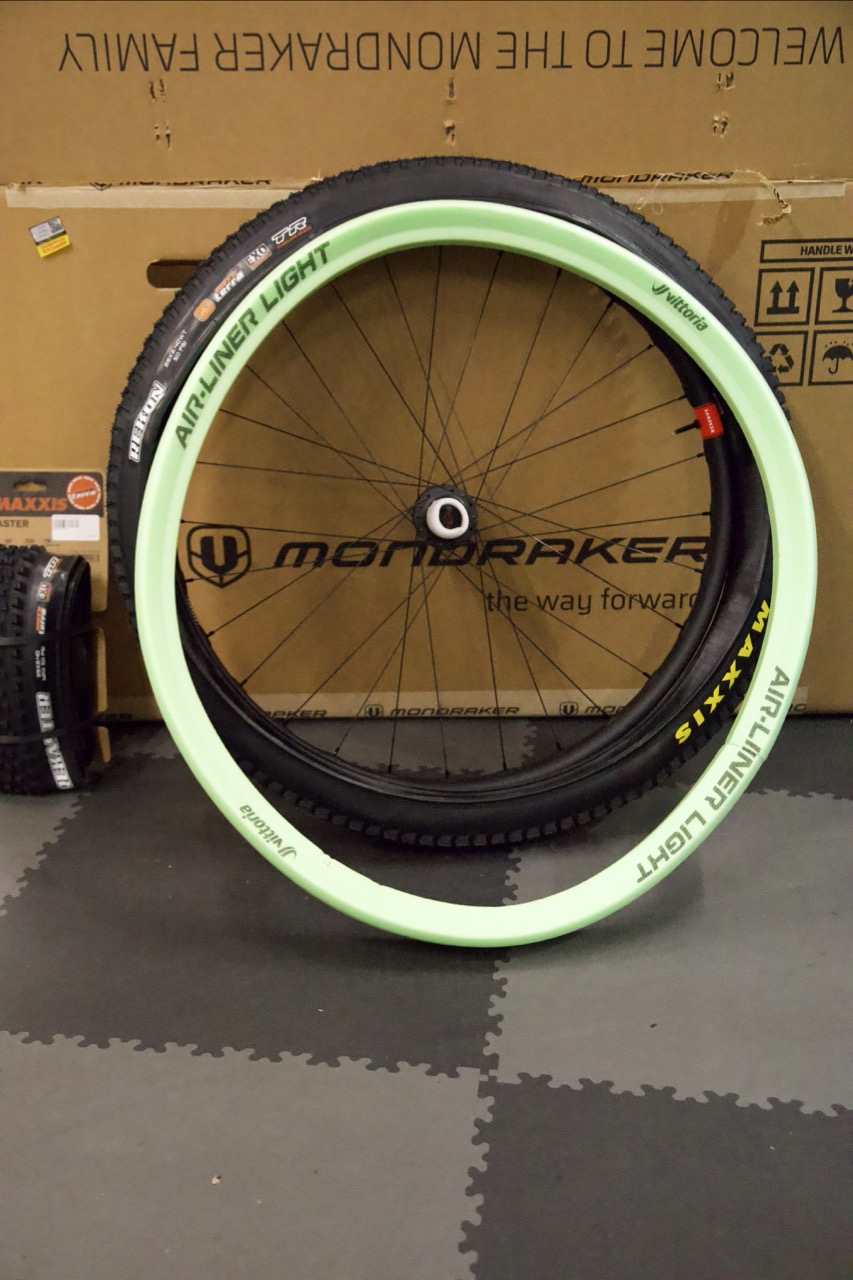
I also fitted a Vittoria Air-Liner insert in the rear.
I’ve had enough punctures at Llandegla to know what the terrain can do to tyres. On the hardtail I expected the rear wheel to receive harder impacts, so the insert provided some additional protection for the tyre and rim — and potentially a better chance of getting back to the trail centre if I did damage a tyre.
It was another example of the thinking behind the whole bike: rather than pretending the disadvantages of a hardtail don’t exist, could I use modern equipment to mitigate some of them?
Not a retro build
Looking at the finished ARC, it’s tempting to describe it as a bit of a Frankenstein bike.
I’m not sure that’s actually fair.
Yes, it’s a mixture of new and used components. But none of the older parts is there simply because it happened to be lying around.
Some components were retained because they remained excellent. Some were serviced before being reused. Others had to be replaced because they weren’t compatible. And money was deliberately spent in areas where I thought newer technology could materially change how the bike performed.
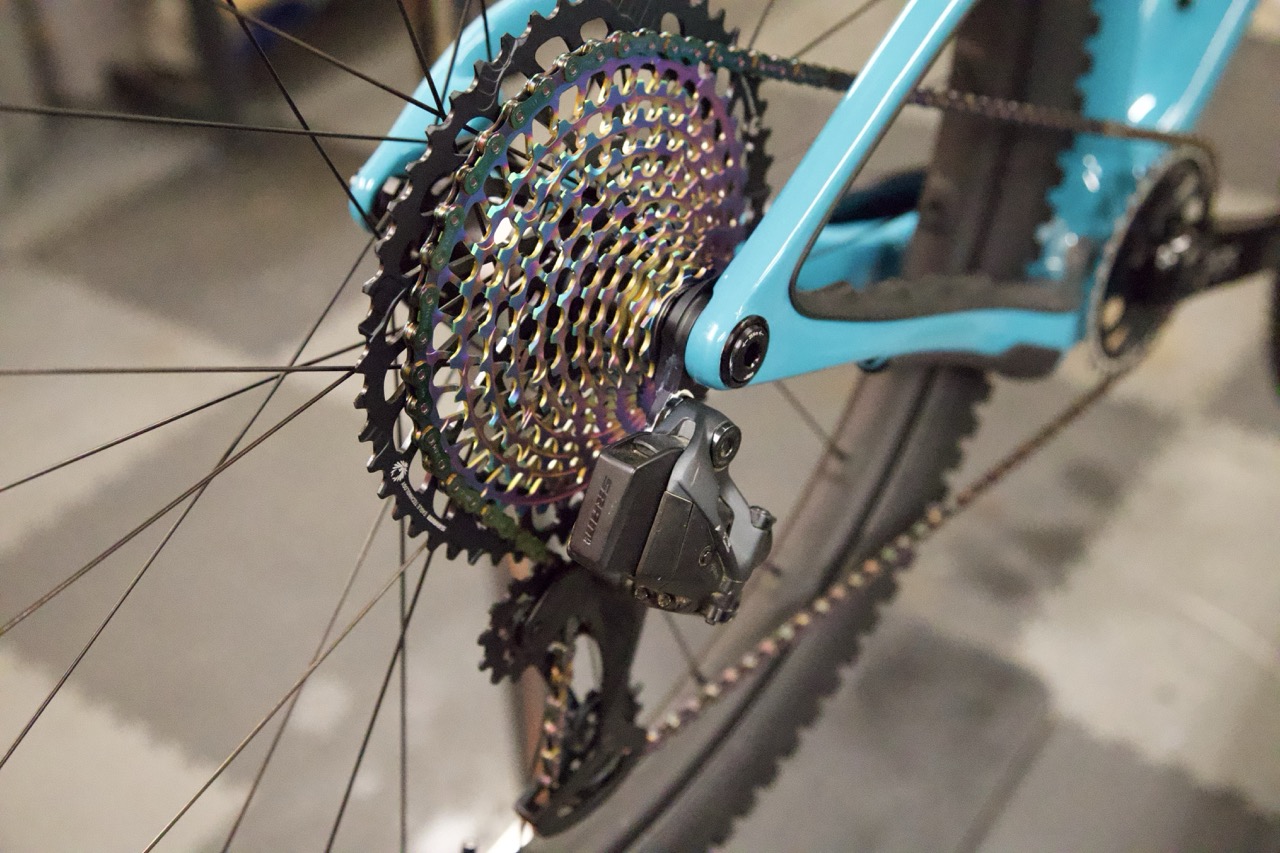
The result is certainly not a retro hardtail.
It’s a modern carbon XC/trail hardtail with a 120 mm fork, 30 mm carbon wheels, 2.4-inch tyres, a dropper post, contemporary drivetrain and power measurement.
And that’s really the point of the experiment.
So, why build a hardtail at 64?
Because I wasn’t convinced that what I thought I knew about hardtails was still true.
The last time I seriously considered one, wheels were narrower, tyres were differently supported, geometry was different and I hadn’t yet seen a carbon hardtail that made me reconsider comfort in quite the same way.
I haven’t suddenly become more tolerant of being beaten up by a bike.
The bike has changed.
My hypothesis was that those changes might have removed enough of the compromises to let me enjoy what originally attracted me to a hardtail: simplicity, low weight, directness and that connection between rider, bike and trail.
But at this stage, that’s all it was — a hypothesis.
I’d built the hardtail I thought I wanted.
Now I had to ride it.